
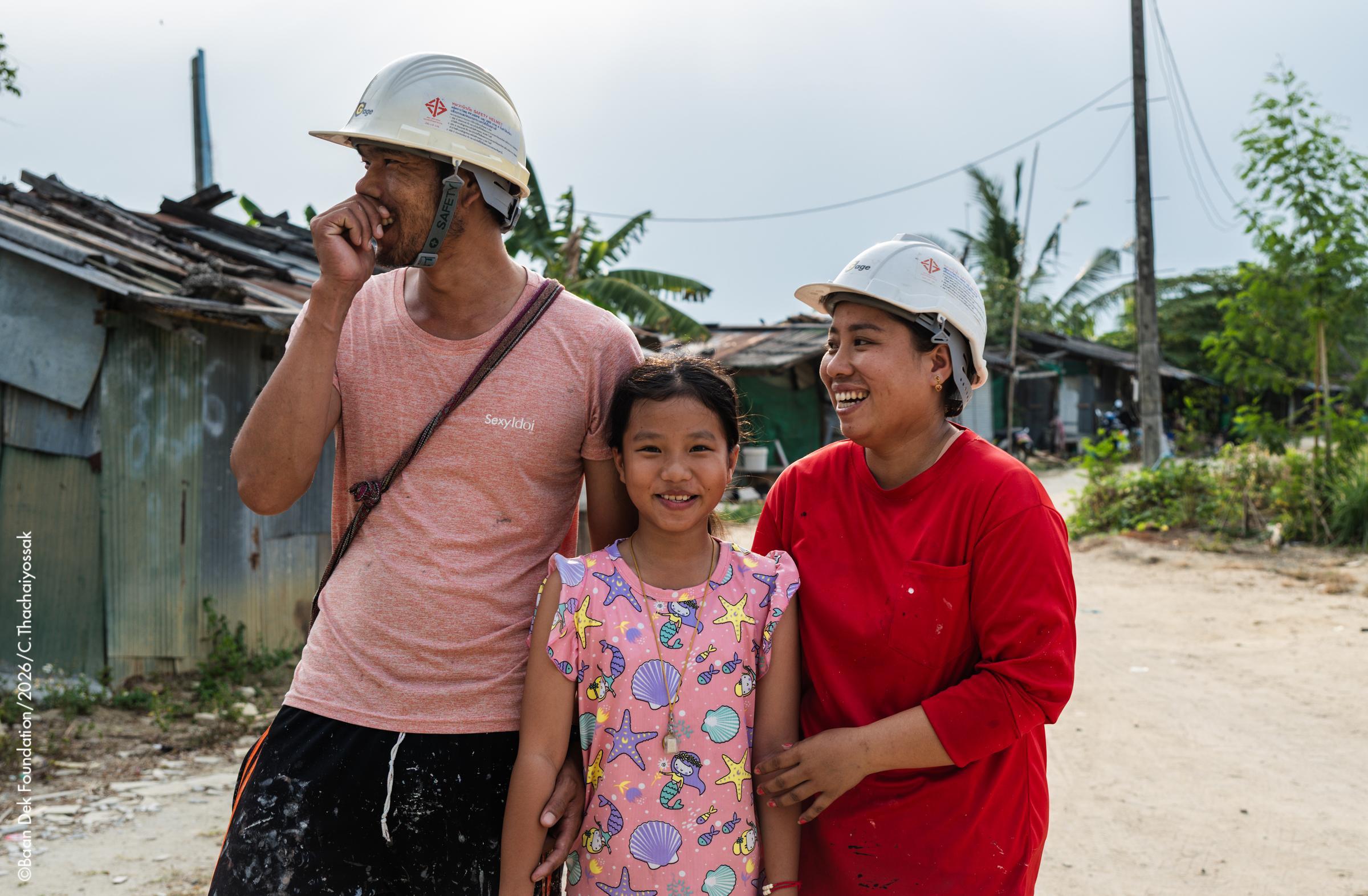
Children on the Move: No Child Left Behind
Across the Mekong Subregion, growing number of children are on the move driven by conflict, uncertainty, poverty and the serch for better opportunities in educaiton and wellbeing. The ongoing crisis in Myanmar, rising living costs, economic hardships, and disasters are forcing families to cross borders in pursuit of safer and more stable future. Thailand has become a key destination from Lao PDR and Myanmar. In these border areas, many children arrived without documentation, stability and reliable support systems. Children from migrant and marginalized communities often remain unseen and underserved. They face significant barriers to education, protection, and essential services - leaving them with a greater risk of exploitaion, neglect, and long-term disadvantage.
These Children in the migration context - including migrant, refugee, stateless, displaced, and left-behind children - experience heightened risks along thier journeys. Language barriers, discrimination, and legal insecurity deepen the vulnerabilities, making harder to access to health care, education, and child-protection services, especially for those without proper documentation. This enforces the urgent need to ensure that no child is excluded regardless of their status and that every can access the care, protection and opportunities they deserve.
Toward a better future for children, so far KNH Thailand and its partners support more than 30,000 children through 14 projects in Thailand, Lao PDR, and Myanmar. We continue working with families, communities, authorities and CSOs to build strong and seamless protection systems, widen access to education, and promote meaningful child participation- creating safer and more inclusive environments for children to grow and learn.
These Children in the migration context - including migrant, refugee, stateless, displaced, and left-behind children - experience heightened risks along thier journeys. Language barriers, discrimination, and legal insecurity deepen the vulnerabilities, making harder to access to health care, education, and child-protection services, especially for those without proper documentation. This enforces the urgent need to ensure that no child is excluded regardless of their status and that every can access the care, protection and opportunities they deserve.
Toward a better future for children, so far KNH Thailand and its partners support more than 30,000 children through 14 projects in Thailand, Lao PDR, and Myanmar. We continue working with families, communities, authorities and CSOs to build strong and seamless protection systems, widen access to education, and promote meaningful child participation- creating safer and more inclusive environments for children to grow and learn.
Show more
Our Focus of Work
Across all its program areas, KNH Thailand promotes the meaningful participation of children and young people, especially those from migrant and marginalized communities. Children are supported to build confidence and skills, while adults and partners are trained to apply participatory approaches. This strengthens inclusive, child-centered systems that are responsive, protective, and accountable to the needs and voices of Children on the Move.
Show more
Every Child
Deserves Safety
Show more

We aim to ensure the children grow up in a safe, protective, and caring environment—both offline and online—free from violence, abuse, and neglect.
The projects focus on the strengthened community-based in child protection systems across Thailand, Lao PDR, and Myanmar borders. The communities have improved awareness of child rights and safeguarding practices, enabling earlier identification and referral of at-risk children by the positive parenting approaches, contributing to safer and more nurturing home environments. Children and young people have participated in training on child rights, online safety, and self-protection, strengthening peer-support networks and reporting mechanisms.
At the policy level, the collaboration with government agencies has advanced safeguarding standards , improved child-friendly justice response and the cross-border coordination mechanisms between these 3 countries to contribute the safer and more standardized repatriation procedures for migrant children.
Show more
Keep Children Free From Exploitation
Show more

The programs aim to reduce children's vulnerability to exploitation in Thailand, Myanmar and Lao PDR by strengthening the family resilience and the protective system. We focus on children on the move who face the risk of trafficking, economic exploitation, unsafe migration, and harmful coping mechanism due to the poverty, the conflict and the legal insecurity.
Children and youth have strengthened life skills, digital literacy, and risk-management capacities. Through women empowerment activities, women’s groups have improved household income and food security, reducing reliance on harmful coping strategies such as child labor.
In Myanmar, vocational and financial literacy training have supported adolescents affected by conflict to pursue safer livelihood pathways. These combined efforts have contributed to reduced exposure to exploitation and stronger family resilience.
Children and youth have strengthened life skills, digital literacy, and risk-management capacities. Through women empowerment activities, women’s groups have improved household income and food security, reducing reliance on harmful coping strategies such as child labor.
In Myanmar, vocational and financial literacy training have supported adolescents affected by conflict to pursue safer livelihood pathways. These combined efforts have contributed to reduced exposure to exploitation and stronger family resilience.
Show more
Education For
Every Child
Show more

KNH Thailand program has expanded the inclusive education opportunities in the border of Thailand and high-risk areas in Mekong Subregion which are the children on the move who face the barriers to continuous learning due to migration, displacement, poverty, and legal status. Increasing the enrollment and the retention of migrant children in Thailand have been supported through collaboration with the public schools and Migrant Learning Centres. Teachers and caregivers have strengthened their capacity to create child-friendly learning environments.
The economic empowerment initiatives for mothers in Thailand and Myanmar have strengthened their ability to support their children’s education and continued learning. In Lao PDR, improved dropout prevention and re-enrolment efforts have helped more children return to and stay in school. Across all contexts, children and young people are encouraged to make informed choices and plan for their education and future pathways, helping them build the confidence and the resilience for their futures.
Show more
Facts and Figures
3
countries
13
projects
3 863
supported children
Impressions from Our Projects


Safe Spaces, Bright Futures
In Mae Sot, where 45 Migrant Learning Centers (MLCs) support the children of migrant workers, Teacher Waan has become a beacon of hope. With 16 years of teaching experience, she began her career using traditional methods from Myanmar—direct instruction and strict obedience. For years, she believed this was the best way.
Her perspective shifted in 2021 when she joined an education project run by RBB. At first hesitant, she gradually realized that each child had unique dreams and challenges. Some aspired to higher education, others wanted practical skills, and many faced barriers due to their families’ circumstances. Teacher Wai began to see her role not as a commander, but as a guide helping students imagine their futures.
In 2023, she embraced Positive Discipline, which transformed her teaching. She learned to listen, respect emotions, and build trust. Together with her students, she created classroom rules, replacing punishment with kindness and structure. As more children arrived in Mae Sot after Myanmar’s military coup—many carrying trauma—she recognized the importance of healing alongside learning.
Today, her classroom radiates warmth. Students feel safe, share their struggles, and pursue their dreams with confidence. Teacher Waan often says, “Love, patience, and understanding can change a classroom.” In her MLC, she continues to shine as a lamp for every child.
Show more


Freedom to Choose My Path
Num, is a 16‑year‑old Grade 6 student at a secondary school in Bokeo Province, Lao PDR. As the eldest son of a police officer, his father hoped he would follow in the same profession.
Num, however, dreamed of becoming a doctor. Since childhood, he has been fascinated by science and medicine, often helping friends with first aid and showing a natural interest in caring for others. While his father was initially disappointed, he respected his determination and gave him the chance to prove himself.
To pursue his dream, new set clear academic goals, focusing on science and chemistry. He also applied to join a volunteer project funded by KNH. For him, this was more than an extracurricular activity—it was a chance to gain teamwork and leadership experience, strengthen his commitment to helping others, and show his family that he was serious about his path.
He explained that while dreams may seem distant, courage and responsibility make them real. Speaking openly with his family allowed him to express his aspirations and demonstrate his right to voice his opinions. His story highlights how volunteer participation can build confidence, leadership, and trust—helping him follow the voice of his heart while honoring his family.
Show more
Our Partner Organizations
- Baan Doi – Home and Healing Center for Children (Baan Doi)
- Baan Dek Foundation (BDF)
- Center for Girls Foundation (CFGF)
- ECPAT Foundation Thailand (EF)
- Foundation of Child Understanding (FOCUS)
- Lahu Youth Development Association (LYDA)
- MAP Foundation (MAP)
- Rights Beyond Border (RBB)
- Thai Community Empowerment Foundation (TCEF)
- The Family Connection Foundation – HUG Project (HUG)
- The Life Skill Development Foundation (TLSDF)
- Promotion of Family Health Association (PFHA) in Lao PDR
Show more
Contact
Kindernothilfe Thailand
Show more